Enforce your architecture rules
Define your own element types, required properties, and allowed relationships. Archinsight validates the model as you write, turning architectural conventions into organisation level rules
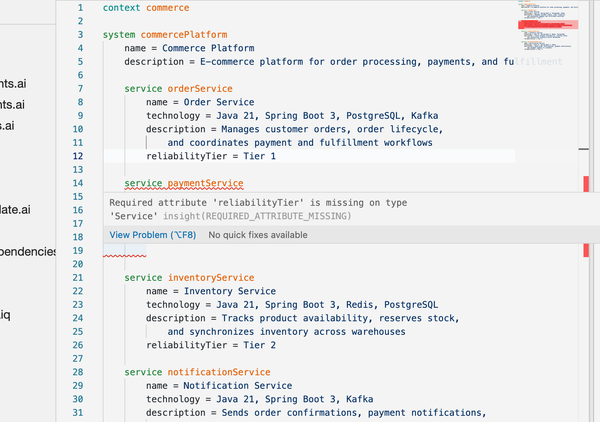
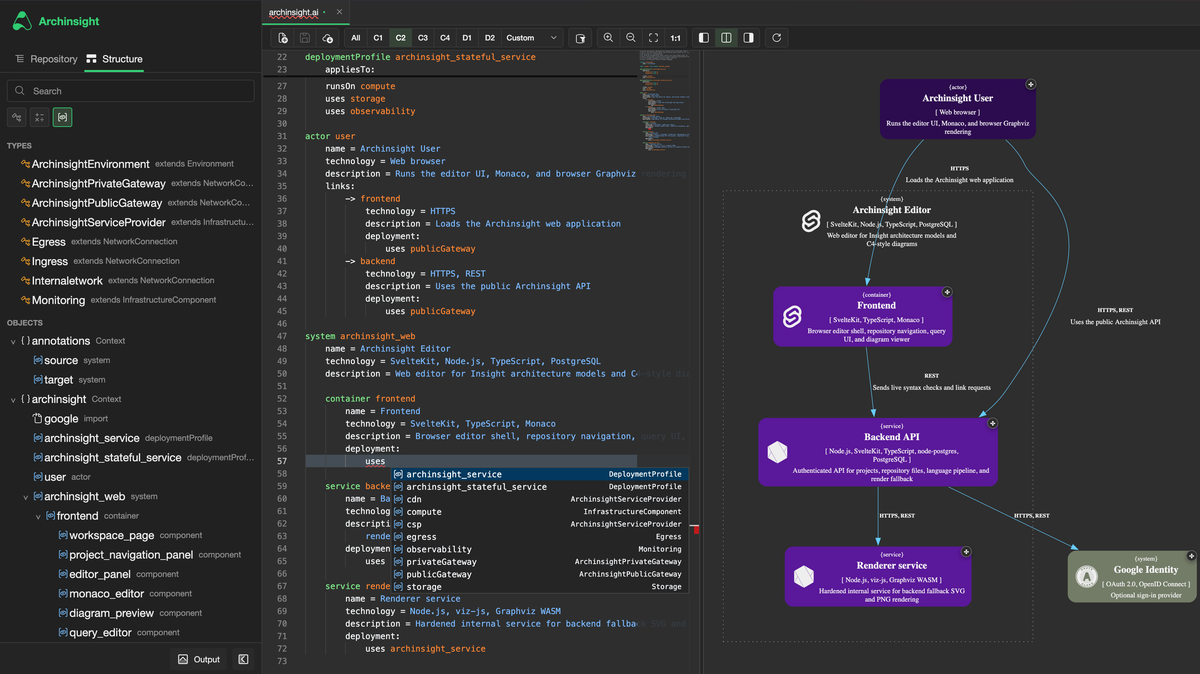
Define your own element types, required properties, and allowed relationships. Archinsight validates the model as you write, turning architectural conventions into organisation level rules
Define components and their relationships in separate source files. Archinsight links them into one consistent model and automatically derives higher-level dependencies

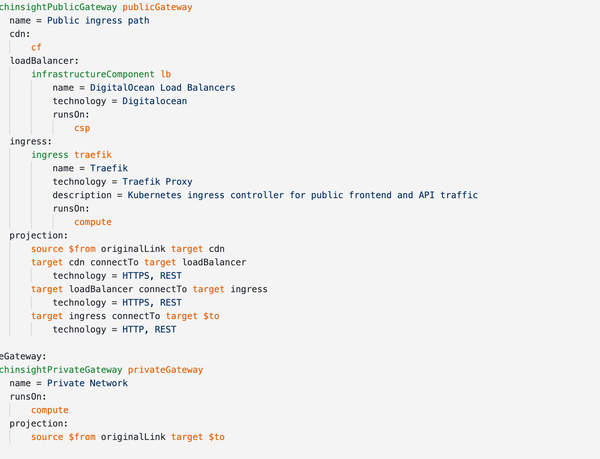
Map logical components to deployment topology and trace communication through gateways, networks, and brokers. See how your architecture runs across regions without mixing logical and physical models
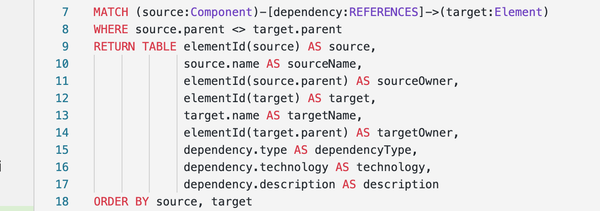
Trace dependency paths, analyze impact, and discover connections using graph queries. Turn the results into focused diagrams or structured reports
Diagrams are optimized for human perception. A typed graph exposes explicit components and relationships, with deterministic consistency checks.
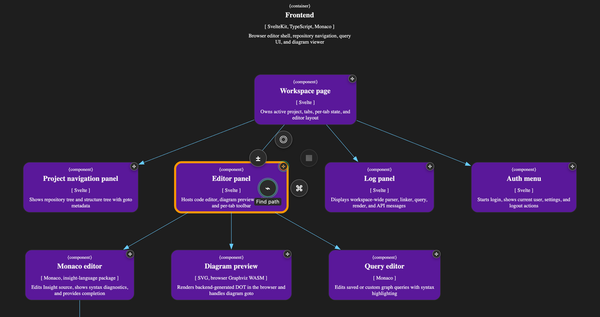
ArchInsight 3.1.3 introduces Quick Actions and Visual Diff. You can now explore dependencies, trace connections, inspect deployments, and see how your architecture changed between Git revisions — directly on
Read publication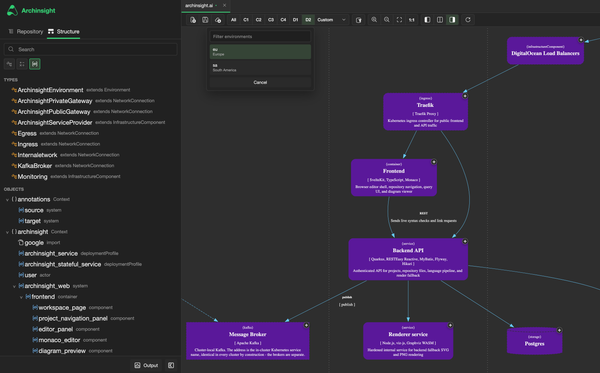
Archinsight has gone through several stages since its first version. It started as a web-based diagramming tool for describing and visualizing software architecture. Over time, it evolved into a
Read publication
When I first came up with Archinsight, I wanted to solve a rather painful problem for IT architects: how to describe dozens (or even hundreds) of services and their interactions
Read publication